the thumper concept, in selecting a defensive hunting rifle

keep in mind ruger also has a 375 and a 416 caliber guide gun,
generally the 375 will have a marginally flatter trajectory, vs the 416 having ,
a bit more "THUMP" or impact energy at close range
either caliber is more than adequate for anything walking in north America ,
if loaded with the correct ammo in the hands of a good shot

yeah my 340 wby and 375 H&H are damn effective and have really good extended reach,
if you're intending to shoot at over 150 yards or so, the 338, 375 & 416 caliber rifle's do have advantages
but after watching what my 45/70 and 450 marlin lever actions can do with various bullets,
on large game, Id have a hard time swapping to anything else if your talking about hunting bears at under,
100 yards or so. yes the 458 caliber bolt guns hit harder , but the increased recoil, and marginally slower,
to use bolt gun actions just don't seem to be that much more of an advantage in my experience,
as any of those rifles projectiles are devastating in the hands of a good shot, there's zero question ,
that a 458 win or 458 LOTT hits considerably harder , but the properly loaded 45/70 and 450 marlin,
have consistently had bullets exit big game.
keep in mind the vast majority of defensive use will be at under 30 yards, and a fairly fast second shot is almost mandatary
 
Last edited:


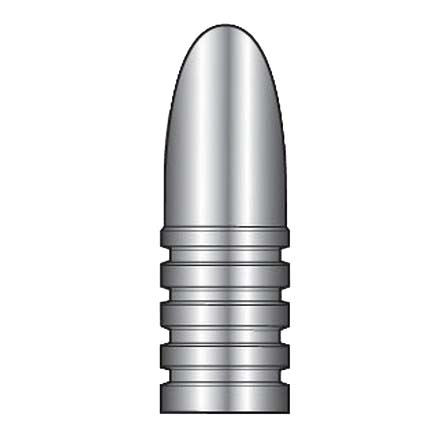
https://accuratemolds.com/bullet_detail.php?bullet=45-360S (a good cast bullet option for the 450 marlin rifles)


1735949681034.png
these bigger bore rifles are rarely used on game past maybe 175 yards, but they are very effective, at busting bone and deep penetration.
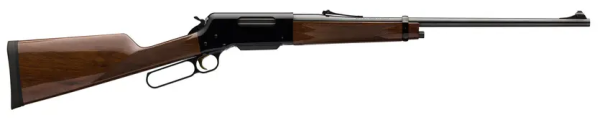
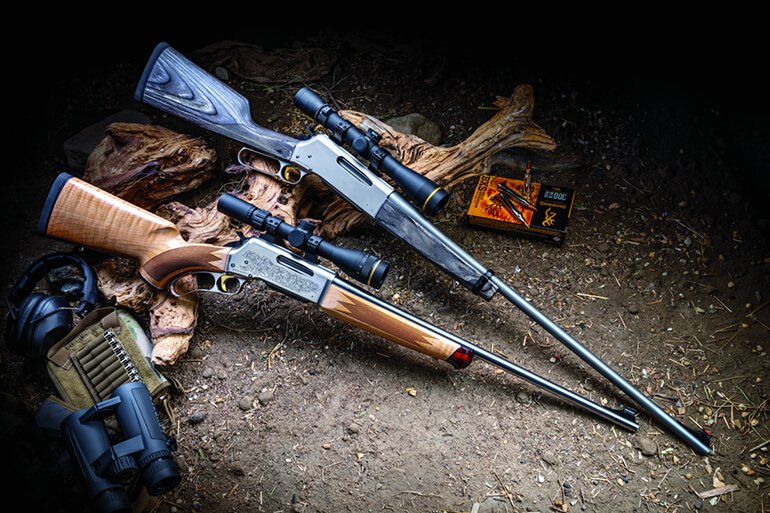
a browning BLR in caliber 450 marlin can be loaded with 405 grain .458 bullets over 50 grains of IMR3031 to produce a very effective elk rifle
easily able to take anything walking in N-america out to at least 200 yards

keep in mind most defensive rifle will not require a scope or if scoped, you want a minimal scope!
this type of rifle will be used at under about 30-40 yards in almost all cases
 
Last edited:


one advantage many people never consider, when looking at a 458 win or 458 LOTT, rifle ,
is that most of those rifles handle larger hard cast bullets very well, allowing you to handload ammo,
that cost considerably less than the commercial jacketed bullets, ye for game in NORTH AMERICA ,
like bear, moose or elk, those hard cast bullets are amazingly effective.
keep in mind that the larger the bore and heavier the hard cast bullet you use the more effective it tends to be ,
without having to push it to very high velocity, for generations hunters have used 45-50 caliber bullets pushed to velocities between maybe 1400 fps and 2100 fps to devastating effect on game, now its true that limits your ability to get accurate shots past maybe 200 yards but the vast majority of game is shot at under 200 yards anyway.


Last edited:
use of quality bullets are always a huge factor in making any rifle effective
north fork and brands like nosler provide those quality bullets,
the magnum .375 caliber rifles, are especially effective in the high sectional density arena.
with selection of a hunting rifle and cartridge some thought should go into not just what works,
but, if you can't depend on that rifle to put down the game with a reasonable shot placement,
you might want to rethink your choices. and you damn sure want a rifle that works flawlessly 100% of the time.
a rifle that works under less than ideal conditions, and think, what the rifle might be required to do defensively.


Last edited:
the 338 win and 375 H&H are very well known rifle cartridges both being well documented,
that with the correct ammo can stop anything walking in NORTH AMERICA with proper shot placement,
those two and similar .338" and .375" are known for having both power,
depth of penetration and reasonably long range or reach, with proper ammo.
when you move up in caliber over those two bore sizes to the .416-.458 you gain power ,
but generally lost some of the longer range potential, or flat trajectory.
as with most things you'll face choices and need to make compromises,
rifle weight recoil levels range and potential penetration, will depend on several factors,
you'll want to think hard about what game you'll hunt and the conditions under which,
you'll most likely be hunting and the game you'll hunt will be hunted under different conditions
and what's required to effectively,be an accurate, lethal and dependable rifle & cartridge combo.
facing a charging lion at 20 yards will require a vastly different rifle than you'll use on a cape buffalo,
at 40-50 yards, and both of those rifles might not be ideal if your hunting polar bear or Kodiak bear,
and that rifle might need to make a good shot at 120 yards or at 35 feet,
and a rifle that might be great for elephant, might be less than ideal on eland
as with most things you'll need to put serious thought into what has been documented to work effectively
 
Last edited:

these guys were smart, in doubling up on what could be a lethal charge
in some situations you either have an accurate and very lethal rifle
or you might be ,a snack for something big,
with teeth and claws that does not like you!
you'll damn sure want a rifle that can shatter bone, destroy tissue,
and punch completely through that lion lengthwise from any angle
I'd be grabbing my 378 wby with 270 grain northfork or nosler bullets,
that can dump in excess of 5000 ft lbs and penetration measured in several feet

 
Last edited:

while the video is rather interesting for various reasons, yes the guns cheap,
I'm not impressed with the mossberg deer rifle.(especially if chambered in 400 legend)
.400 caliber has very limited selection in projectiles that are designed for rifle velocity and larger game.
(yes ammo selection matters and Id bet changing ammo may help accuracy)
but Id feel the BLR is a better value even if its twice the price
Im less than impressed with the 400 legend (215 grains at 2200 fps?)
Id suggest you buy a browning BLR in 358 win (250 grains at 2350 fps)
if you want a decent quality mid range, very effective deer/elk rifle

if you want a mossberg bolt action, for deer,I'd suggest you select a 270 win or 30/06
ammos far easier to find, cheaper and you'll have better results
 
Last edited:

i have only seen one moose shot over 5 decades simply because pulling a valid licence in most areas is very difficult and expensive
I have run into several while sneaking through the woods over those decades, and they are HUGE, and from what I see they just ignore you.
(that might be because in the areas I hunted they are illegal to shoot)
 
while a knowledge of the games anatomy and the ammo you use are both huge factors
projectile mass (WEIGHT) ,caliber (diameter) and impact velocity MATTER
shot placement is obviously very CRITICAL to your success.

you can't assume any animal will react exactly as you assume they will.
most of the professionals will strongly suggest you use a,
.416 caliber as about minimum caliber and .458 as the standard stopping rifle.
a 375 H&H uses a 270 -300 grain bullet, the standard bullet weight in 458 caliber,
is generally the 450-500 grain bullet if your goal is use as a stopping rifle
the calculated impact energy is not a huge difference,
but the depth of the penetration and tissue damage generally is slightly greater with the larger bore size.
obviously the projectile design ,caliber, and shot placement both,have a huge effect on your potential results

a factor thats seldom explained, in selecting the correct caliber and projectile type ,
is that there are basically three factors that will have a huge effect on the rifles performance.
obviously careful shot placement and a a good understanding or knowledge of the games anatomy are critical.
projectile design, bullet mass, caliber and velocity, must be carefully matched to the game and,

with a wide allowance for various ranges and shot angles. you must understand the rifle and cartridge limitations.
what might work in 70% of the cases , might be totally inadequate in the other 30% due to range or impact angle,
thus a good knowledgeable hunter should select the cartridge for the potentially worst conditions he might face.
and that is not a postcard , broadside heart/lung shot at 50-150 yards

you should select a cartridge and projectile that will both expand and fully penetrate your intended game are ,
both the shortest and longest ranges and be fully capable of breaking bone and very deep penetration from all likely ranges and angles.
the issue is that rapid expansion on impact might be highly desirable, on the classic heart/lung shots,
but that same projectile and caliber might lack the required mass and deep penertation required,

from other less advantageous angles or extended ranges. every choice you make is a compromise,
in rifle weight, ease of operation,consistent accuracy, cost and in many cases, in flat trajectory,
recoil level, and at times accuracy,there is no debate on the fact that a properly placed projectile ,
from something like hunter armed with a, 243 win, 257 Robert's or even a 6.5 creedmoor can be lethal on elk within the hands of a skilled and experienced hunter, who understands the cartridges limitations,
but that experience , he has gained ,tells that hunter that he is limited to certain ranges and angles that a hunter with something like a 300 weatherby, 338 win or 8mm rem mag, might not be nearly as limited or restricted to.

in the 1860s-1890s hunters armed with rifles like a 45/70 or 50/110 winchester with what today's hunters would consider to be,
hopelessly low velocity and rainbow trajectories' killed millions of buffalo and elk and deer with cast lead bullets ,
they learned to judge distances and shoot accurately, and most of those hunters,

were far more experienced that most modern hunters ,who can't hunt all year round, but are limited to maybe 30 days a year.
even today fairly heavy for caliber cast lead bullets can be very lethal in skilled hands simply because they penetrate well.
I can assure readers that my ELK hunting buddies have used a marlin 45/70 for 5 decades, for the camps back-up rifle,
most years with a hard cast gas check bullet , similar to these at velocities just under 2000 fps,
and as a result many of the older hunters bought similar rifles after seeing the results they had.

 
Last edited:
there is a good reason to carry and become very effective in the use of a powerful rifle,
and having one you can shoot accurately and repeatedly and rapidly,
has demonstrated it is a skill you might need, you might be amazed at how often a rifle like a marlin 45/70,
or a browning BLR in a cartridge like 358 win or 450 marlin, or maybe 300 win mag, or if your proficient with a bolt action,
like I have over time become, with,my wby 340 mag, 375 H&H or my sako 375 H&H. or what many guys in my group use,
a remington 7600 in 35 whelen. rifles like that can provide very effective and decisive lethality when needed
 
Last edited:


the browning 450 marlin caliber BLR allows you to get about 100-150 fps more,velocity,
with similar bullet weights to a 45/70 AND IN MY EXPERIENCE,

the browning blr has marginally better accuracy
I regret selling my marlin 45/70 , but my browning BLR, in 450 marlin, is extremely accurate,
and can dependably drop elk rather easily, at ranges under 250 yards


powders like imr 3031, rl7, and imr 4198 work well
The maximum pressure limit for the .450 Marlin is 43,500 psi (
Maximum pressure: 450 marlin 43,500 psi
the SAAMI pressure for the .45-70 cartridge, which is 28,000 psi.
some older firearms chambered in 45/70 like trapdoor carbines are rated at lower pressures,
some rifles like RUGER and BROWNING SINGLE SHOT FALLING BLOCK rifles can be safely pushed to near 40,000 psi

The REAL pressure limit for a .45-70 cartridge varies significantly based on the firearms ,

It is crucial to check the specific pressure limits for your firearm's make and model before loading or firing any .45-70 ammunition.
 
Last edited:

FOR MOST PEOPLE THE .375 CALIBER MAGNUMS ARE JUST A BIT MORE POWER AND RECOIL THAN THEY CAN EASILY LEARN TO SHOOT ACCURATELY WITH, AND A SLIGHTLY LESS POWERFUL .338 MAGNUM IS ABOUT THE MAXIMUM POWER AND RECOIL THEY CAN COMFORTABLY HANDLE, BUT THERE ARE WAYS TO REDUCE FELT RECOIL.


NOW THERES NO WAY YOU NEED A 416 OR 458 MAGNUM FOR ANYTHING IN THE LOWER 48 STATES BUT THEY ARE FUN RIFLES IF YOU DON'T MIND RECOIL LEVELS THAT MOST PEOPLE FIND TO BE ABUSIVE.

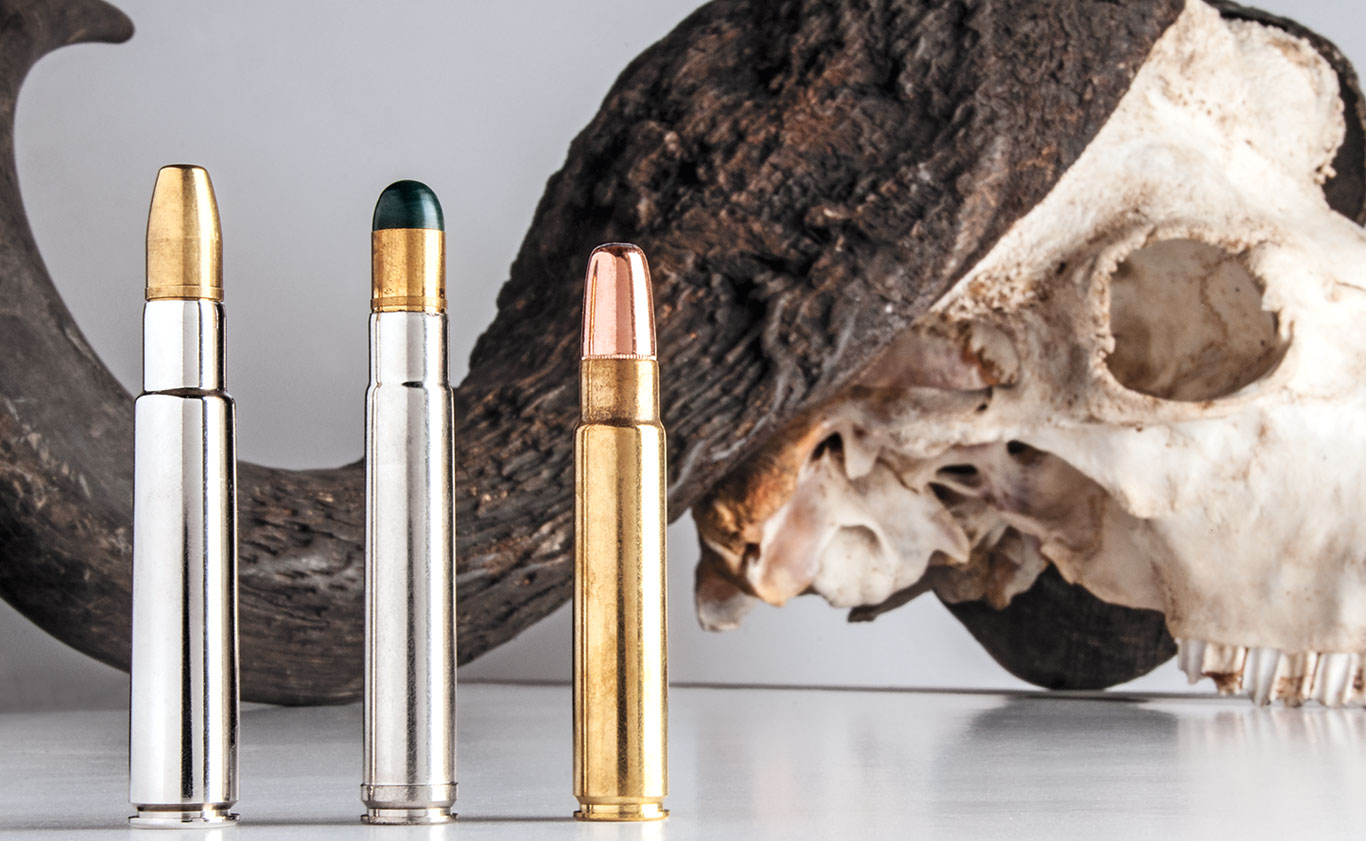
The .416 Ruger and .416 Remington Magnum offer near-identical ballistic performance (approx. 2,400–2,500 fps with 400-grain bullets) for dangerous game, producing ~5,000+ ft-lbs of muzzle energy. The key difference is that the .416 Ruger fits in a standard-length action with a compact, non-belted case, while the .416 Rem Mag is a longer, belted cartridge


Last edited:


almost mandatory (BUY TWO RECOIL PADS AND SEW ONE INTO BOTH SHOULDERS OF YOUR HUNTING VEST)

my preferred bullets that have been well proven to work


for most large game rifles a 3.5" high zero , at 100 yards is a good place to start :like:
check your rifles trajectory against that 3.5" high at 100 yards and in most cases, you,
ll find it results in a 200-300 yard dead on zero, and being able to make lethal hits easily past those ranges once you gain skills
1739900489876.png


Weatherby340ma.jpg


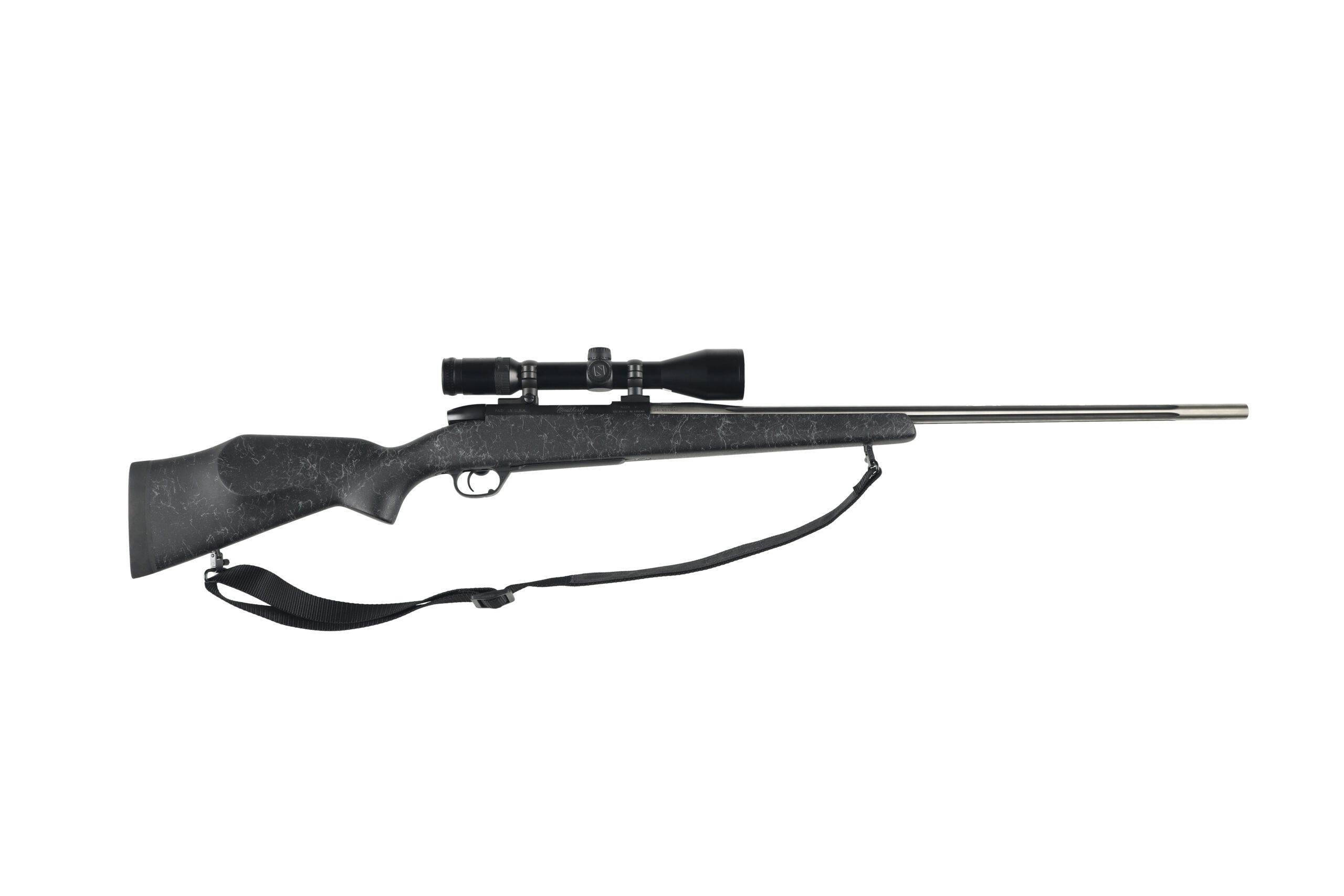
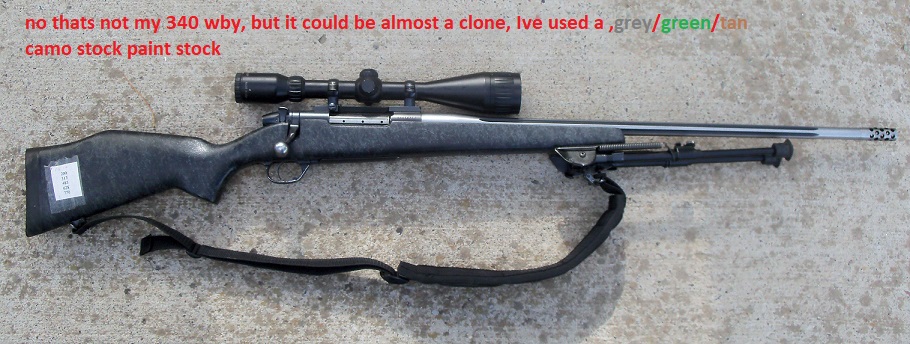
no that's not my rifle but its damn near its clone (top quality equipment is never dirt cheap,
but a Weatherby 340 magnum or a 375 H&H magnum rifle with a Fibermark stock should last a life time of elk hunts
almost everyone I hunt elk with prefers a BROWNING BLR in 358 win or a REMINGTON 7600 in 35 whelan for elk hunting,
the reasoning is simple those rifles are MUCH LESS EXPENSIVE, the RECOIL IS MUCH LOWER and AMMO COST less by a significant percentage , but the Weatherby 340 magnum or a 375 H&H magnum rifles have potentially much flatter trajectory's and hit harder,
you make the choice, while I have only very rarely even been able to see any elk at ranges over about 300 yards in the areas I hunted for decades I was more than willing to carry a heavier rifle with a bi-pod to have that potentially longer range and heavier energy delivery, I figured that you might go decades before seeing an exceptional bull elk, and if I had the opportunity only maybe 5% of the time I still wanted to increase my odds of success should that opportunity be available even with the less desirable levels of weight and recoil and much higher cost.(the weatherby fibermark in a Weatherby 340 magnum or a 375 H&H magnum rifle with a Fibermark stock costs easily 2-4 times as much as the other options as does the ammo it shoots ) ELK HUNTING HAS NEVER BEEN CHEAP:like: :facepalm::bhow::swearing:


how many of you gentlemen have and use a bi-pod on your rifle?
I've used the 13.5" /27" swivel bi-pod for decades on my 340 wby synthetic bolt action, rifle.
the bi-pod allows you to have a steady rifle rest shot from both a prone or seated position,
now I'm sure I'm in the minority and many guys will object to the added weight , but I've learned to hunt by glassing and covering a great deal of ground slowly,
the key here is in carefully selecting the areas hunted and not randomly wandering aimlessly.
you want to study topographical maps carefully, and have experience, you can look over the options, get into productive areas well before other hunters and set up, before first light, allowing you to benefit from the influx p o hunter pressure as they move through the are disrupting game movement, and increase your odds of success by hunting ,
natural travel routes and terrain choke points, and not wasting time glassing the areas with lots off easy road access.
elk and deer learn very quickly that travel, during daylight, near logging roads with vehicle travel access , is not safe.
if you set up to glass for game on a natural game travel choke point , like a narrow side canyon, that has a creek and cover youll up your odds significantly.
having a bi-pod on your rifle and a good familiarity with your rifles trajectory sure helps.
 
Last edited:

257 ROBERTS WITH A 110-120 GRAIN PREMIUM BULLETS
(if you can find one in a BLR its a good deer rifle with 110-115 grain premium bullets)

280 REMINGTON 150 GRAIN-160 GRAIN BULLETS PREFERED
(marginally harder hitting if the correct bullets are used than a 270 win and flatter trajectory than a 30/06)

264 REM MAG, 140-150 GRAIN BULLETS MAKE THIS A GOOD DEER CARTRIDGES

6MM REMINGTON 100 GRAIN MAKES A LOW RECOIL DEER RIFLE
( good varmint and deer rifle in browning or Ruger single shot)

303 BRITISH 174 GRAIN=180 GRAIN BULLETS MAKES A GOOD mid range DEER RIFLE

7MM MAUSER ALL AROUND DEER RIFLE AND WITH CORRECT BULLETS ELK EASILY TAKEN,
(if good shot placement, but the 280 rem has a noticeable velocity advantage)

8MM MAUSER ROUGHLY A 30/06 EQUAL with 180-200 grain bullets when properly loaded
 
Last edited:
Back
Top