Zinc Myth and Test Data on a Dozen more Oils
I have “Wear Test” data on a dozen more oils. Here’s how they all rank in terms of “wear protection capability”, just among themselves:
1. 5W30 Pennzoil Platinum, API SN synthetic = 99,949 psi
This oil is the next step “below” Pennzoil’s Ultra.
2. 5W30 Havoline, API SN conventional = 95,098 psi
Havoline used to be Texaco’s oil brand, but since Chevron took them over, it is now a Chevron brand. It appears that this oil may be a re-bottled version of 5W30 Chevron Supreme oil.
3. 10W60 Castrol TWS Motorsport, API SJ conventional = 90,163 psi
This oil is manufactured in Europe and is sold in the US for BMW models M3, M5, M6, Z4M, and Z8. This is a somewhat odd multi-viscosity, so the interest here was to get some insight as to why BMW calls for this oil in some of their models.
4. 5W30 Havoline, API SN synthetic = 89,406 psi
Havoline used to be Texaco’s oil brand, but since Chevron took them over, it is now a Chevron brand
5. 5W30 Valvoline Nextgen 50% Recycled Oil, API SN conventional = 87,563 psi
The interest here was to see just how good recycled oil might be.
6. 5W30 Castrol Edge w/Syntec, API SN (formerly Castrol Syntec) black bottle, synthetic = 85,179 psi
The Castrol Edge w/Syntec line of oil, falls well below the capability of the Castrol Edge w/Titanium line, which is Castrol’s top of the line oil.
7. 5W30 Peak, API SN synthetic = 80,716 psi
I was curious to see how their oil line shaped up.
8. 5W30 Edelbrock "Cat-Safe", API SM synthetic = 78,609 psi
This oil is made for Edelbrock by Torco
9. 5W30 Pennzoil, API SN yellow bottle, conventional = 76,989 psi
10. 10W40 Chevron Supreme, API SN conventional = 76,806 psi
11. 5W30 Peak, API SN conventional = 73,690 psi
12. 10W40 Summit Racing Premium Racing Oil, API SL conventional = 59,483 psi
This oil is made for Summit by I.L.C.
The bottle makes some bold claims, such as:
* Double the zinc for superior flat tappet cam protection.
* The additive package contains 1800 ppm ZDDP, providing levels of protection unattainable from conventional motor oil. Provides excellent protection from metal to metal contact.
Problem is, this oil fell FAR SHORT of living up to that inflated boasting. These claims were obviously created by the Marketing Department with no regard for what this oil can actually do. This oil ranked a pathetic 85th out of the 94 new oils I’ve tested so far. And once again, the supposed high levels of zinc DID NOT help this oil perform very well. Buyer beware. Motor oils are among the worst products for false advertising.
Now let’s consider that claim of 1800ppm ZDDP. Is that 1800ppm the TOTAL if you add the zinc and the phos individually? Or is that 1800ppm of zinc AND 1800ppm of phos? Or is it something else? When people throw around ZDDP values, do they even know what they are saying? I will be Lab Testing this oil soon to see just what is really in it, and to see how that claim of 1800ppm ZDDP compares to reality. I’ll post my findings when they are available, so stay tuned for that.
This Summit oil and the Castrol 10W60 oil have appeared in recent posts of my motor oil wear protection ranking list, but they have not appeared in any write-up until now. Below is some motor oil tech info, info on my testing, and my latest complete motor oil ranking list, which now includes the 12 oils above.
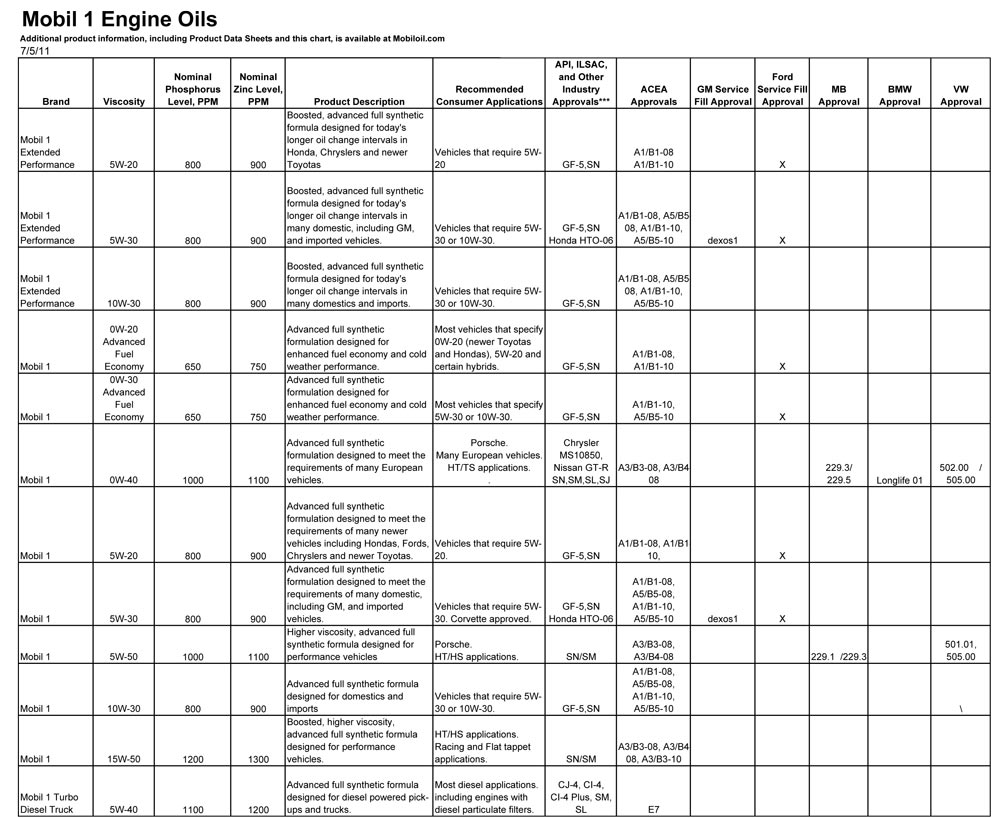
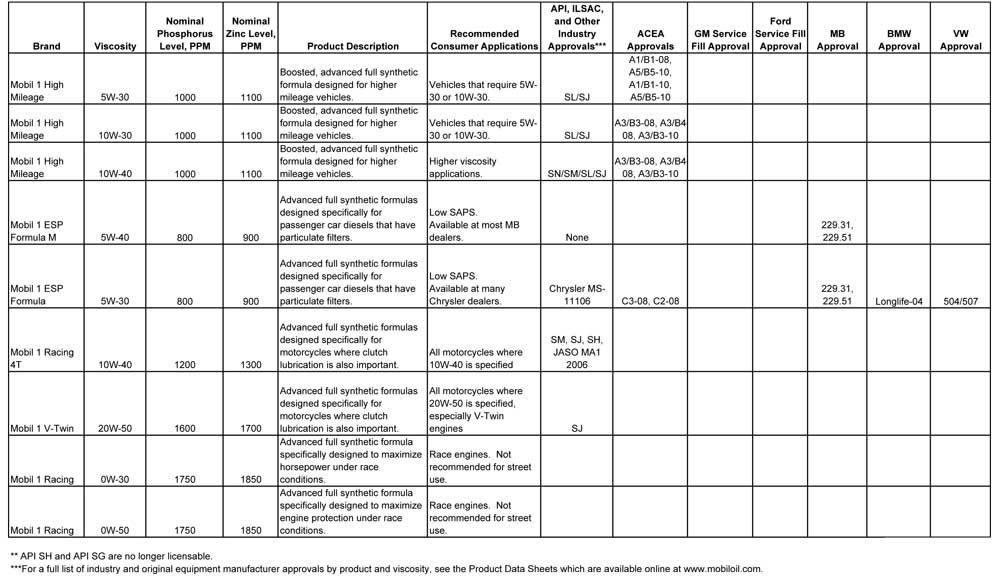
You DO NOT need a high level of zinc in your motor oil for adequate wear protection in high performance engines, not even for flat tappet engines. Contrary to popular belief, the zinc level alone is NOT what determines an oil’s wear protection capability. Zinc does NOT build up a coating on parts like some sort of plating process. Zinc is consumed/sacrificed A LITTLE AT A TIME as needed by the heat and load on mating parts, to help prevent wear as the engine is operated. And it is physically IMPOSSIBLE for more zinc to provide more wear protection, because zinc simply does NOT work that way. More zinc simply lasts longer because it takes longer for a larger quantity of it to be depleted. It’s much like the way more gas in your tank takes longer to run out, but more gas in your tank does NOT give you more HP.
The thinking that more zinc provides more wear protection is only FOLKLORE that has been repeated so many times that most people just ASSUME it’s true without any proof. And repeating wrong information a million times will NOT magically make it become true. Among those who just assume it is true, includes people at Cam Companies, and even people at some of the smaller Oil Companies who apparently don’t bother to perform any wear protection testing, since their oils often fall WAY SHORT of their own outlandish hype. The fact is, there is absolutely NO real world test data proof to back up the incorrect urban legend that more zinc is needed for more protection. That is merely a MYTH that has been BUSTED by actual real world dynamic motor oil wear testing under load. An oil’s wear protection capability is determined by its base oil and additive package “as a whole”, NOT just by how much zinc is present. And newer motor oil anti-wear additive components that have replaced a good percentage of the zinc that used to be used, are equal to or better than zinc. There is absolutely NOTHING magical about zinc that makes it the only component worthy of being used.
If someone insists that you must have high levels of zinc for adequate wear protection in high performance engines, no matter WHO they are, and no matter WHAT Company they may represent, ask them to PROVE IT by providing actual REAL WORLD TEST DATA that backs up that claim (and mere links to Internet Oil articles that call for high levels of zinc, is NOT real world test data proof). But, they will NOT be able to prove that old myth, because as mentioned above, zinc simply does NOT work that way. Some high zinc oils provide excellent wear protection, while other high zinc oils provide very poor wear protection. So, you can throw away that useless motor oil zinc level reference chart. Because it cannot help you choose the best oil for protecting your engine. If you rely on zinc levels alone, to choose what you "think" is the best oil, you can very easily shoot yourself in the foot, and NOT end up with the wear protection you think you have.
You can use the link just below, to take a look at a GM Motor Oil Report titled, “Oil Myths from GM Techlink”, which backs up the facts above and matches my own motor oil wear test results. If the link below does not take you directly to the website, then Copy/Paste the link in your browser:
http://www.nonlintec.com/sprite/oil_myths.pdf
This GM Oil Report is meaningful regardless of how stiff the valve springs were in their test engines. Because they were looking at wear protection capability DIFFERENCES between various levels of zinc/phos, and their finding that “more was NOT better” (the same thing I found in my testing), applies to wear protection in any engine, no matter what the spring pressures are.
I have performed extensive motor oil “Wear Testing” over the past year or so, to measure the “Load carrying capacity/Film strength” of nearly a hundred different motor oils. The results of this dynamic friction testing under load, are used to compare the wear protection capability of the various oils. I’ve done this because I wanted to cut through all the misinformation and misunderstanding that is out there about motor oil, get to the truth, and to find out what the FACTS really are. The resulting oil test data is NOT a theory. It is NOT an opinion. It is the real deal, because it is REAL WORLD TEST DATA, just like engine dyno output data is real world test data.
The motor oil tester I use, is a valuable tool for determining an oil’s operating characteristics, yet it is not testing oil inside an engine, because that is simply impractical on a scale this large. It is somewhat similar to how an engine dyno is a valuable tool for determining an engine’s operating characteristics, yet it is not a test of an engine inside a car going down the track or road.
Every single oil I test, is subjected to the EXACT SAME test procedure for an accurate back to back comparison with other oils. My tester and test procedure provide very consistent and repeatable results. And yet, rather than rely on only a single test value, I test each oil multiple times, then those results are averaged. This allows the most accurate and representative final value to be reached for comparison. So, every oil has the exact same opportunity to perform as well as its chemical composition will allow.
As a calibration check to make sure that the tester is always consistent, I periodically recheck the number one highest ranked oil that achieved that ranking position around a year or so ago. No matter when I recheck it, and no matter what kind of test values any other oils have been generating in between, that number one oil has always retested to within a couple of percent or so of its original highest ranking value. That shows me that the test value generated by any oil is correct, because the tester is still operating exactly the same as it always has. Even though I am not splitting atoms here, I do everything I can to ensure that all the test results are accurate, meaningful and worthy of comparison.
My tester is NOT a “One Armed Bandit” tester that can have its manually operated loading arm manipulated by the operator to provide false data to promote a certain product. I purposely did NOT get one of those testers, because I’m only interested in the facts, NOT propaganda. My tester does NOT even have an arm that is manually operated. On my tester, small individual weights are applied one at a time to gradually increase the applied load, so that the oil is not shock loaded, which could artificially penetrate the oil’s film, and invalidate the results.
I don’t sell oil, and I don’t get paid by any Oil Companies, so I have no vested interest in what oil people buy or use. But, I share my test data on Forums as a courtesy to other like-minded gearheads, for them to make use of for choosing the best possible oil for their needs, if they choose to. This dynamic motor oil wear testing is straight forward and most technically knowledgeable gearheads have no problem seeing the value in it. And they understand the significance of this type of motor oil test data, which CANNOT be found ANYWHERE else. This is the ONLY data available where this many oils are all tested on the same equipment, at the same representative temperature, using the same procedure, by the same operator. So, this is the best apples to apples motor oil comparison information you will ever find. I get a good number of PM’s and emails from folks thanking me for my data. A lot of people do appreciate it and make use of it. Even a number of other Degreed Engineers I know, use it to choose their own oil. And some people even post copies of it and links to it, all over the Internet. On top of that, quite a few folks have sent me oil to test for them. So, I do have a lot of supporters who consider this test data their best source for motor oil comparison.
On the flip side, there will always be those who disagree with information that is posted. And that’s fine, because everyone is entitled to their own opinion. But, there are usually a few guys who don’t want to engage in a normal discussion, and immediately get nasty, insulting, and make incorrect comments and assumptions without even knowing what they are talking about. Though, some of them “think” they are motor oil experts simply because they’ve done some Internet research. Yeah right, if something is on the Internet, it has to be true……..NOT!! But, these people believe everything they read about zinc being the answer to everything, and take it at face value even with no supporting test data to back it up. Yet, they do not believe the actual real world test data I provide, nor do they believe that GM Oil Report above that backs up my findings. Go figure. But, they feel the need to attack my data, even though they have never done any back to back oil testing themselves, and have absolutely no real world test data of their own to backup what they say. It is almost comical when they do that, because it just points out that they are NOT technically capable of comprehending the significance and value of this real world test data, which is not difficult to grasp.
And you don’t have to be a Rocket Scientist to know that real world testing trumps Internet articles every day of the week. The concept of product performance “lab testing” like I’ve done, is commonly used throughout many, many industries. So, none of the kicking and screaming these guys do, will change the Physics involved, nor change the oil’s chemical formulation that generated the test results. In other words, shooting the messenger will not change the FACTS of the oil test results. And rather than asking questions and learning something, these guys just want to argue, make foolish comments, and embarrass themselves. It is their loss, since they cannot get any meaningful direction from a useless zinc level reference chart. So, they’ll just have to guess which oils provide outstanding wear protection and which oils do not. And we all know how much guessing is worth.
I let the test data show me what’s truly going on, because that is absolute. And as mentioned above, my test results mirror the results of that GM Oil Report above, which is further proof that my test data is spot on. Also, a good number of folks, who understand and appreciate my test data, have asked me to continue posting it, in spite of what the naysayers say. And my oil test write-ups typically get a lot of views and replies on the Forums. It's not unusual for some of my write-ups to get thousands of views and hundreds of replies. This shows that there is a tremendous amount of interest in my write-ups on actual real world testing of motor oil. So, I will continue posting that data for the folks who want to know the FACTS about motor oil. And if the non-believers don’t like that, they can always close out and go on to the next topic.
I’ve also wear tested a handful of used oils, both synthetic and conventional, that had 5,000 miles on them. And in every case, there was NO REDUCTION what so ever, in wear protection capability, even though the zinc levels had dropped by around 25% on average. So, this is even further proof that the zinc level is not tied to a motor oil’s wear protection capability.
We also still see from time to time, wiped lobes in properly built flat tappet engines that were using high zinc oils. And flat tappet users will typically use a somewhat elaborate procedure to try and NOT wipe any lobes during break-in of a new cam and lifter set, even when using high zinc oils. And they will also often add in zinc additives to further increase the zinc level. But, adding zinc additives to any oil is a huge mistake, no matter what those snake oil salesmen claim. Most major oil companies say to NEVER EVER add anything to their oils, because doing so will upset the oil’s carefully balanced additive package. I tested doing that very thing in several different oils, and found that adding zinc additives in every case, ruined the oil by significantly REDUCING its wear protection capability. That of course, is just the opposite of what people “think” they will be getting. Those oil Companies were absolutely correct about not adding anything to their oil. So, when people follow that high zinc level nonsense, they are often making things WORSE, not better. If people chose an oil based on its “wear protection capability” rather than its “zinc level”, then a lot of oiling concerns would go away. And losing sleep over flat tappet break-in would be a thing of the past.
Performing some type of oil film strength testing is ABSOLUTELY THE ONLY WAY to determine an oil’s wear protection capability, because an oil's film strength is the last line of defense against metal to metal contact. In order to reach metal to metal contact, and subsequent wear or damage, you MUST penetrate the film strength of the oil. And oil thicker than a mere film becomes liquid oil. Of course liquids are NOT compressible, which is how hydraulics work. Since liquids cannot be compressed, ALL oils provide THE SAME wear protection when they are in liquid form, no matter if they cost $1.00 per quart or $20.00 per quart. So, oil film strength testing the GOLD STANDARD for determining how capable an oil is at preventing wear, and how different oils directly compare to each other. In other words, the ONLY THING that separates one oil's ability to prevent wear from another oil's ability to prevent wear, is the difference in their individual film strength capabilities.
MOST IMPORTANTLY, oil film strength capability DIRECTLY APPLIES to flat tappet lobe/lifter interfaces, cam gear/distributor gear interfaces, mechanical fuel pump pushrod tip/cam eccentric interfaces and other highly loaded engine component interfaces.
Due to size limitations, the ranking list will be posted below.
540 RAT