
Google Scholar
Reasonably Decent Bear Protection In A Handgun
don't think a 44 mag, if properly hand loaded, is as under powered as some people who own the larger magnum revolvers would have you believe, while its certainly true that cartridges like the 454 casull, 480 ruger, 460 and 500 S&W mags have more power, there, comes a point in any hunt where...
garage.grumpysperformance.com
Bullet Casting Alloys - RotoMetals
Find the best prices on metal bullet casting supplies at Rotometals! Our casting lead ingots are high quality & perfect for making bullets. Shop now!
 www.rotometals.com

its been my experience that proper/ consistent bullet casting, is dependent on both the consistent casting temperature, and the bullet casting alloys, used, and as most bullet casters have little or no way to ascertain the exact ratio, of those alloys if sources such as scrap range lead, wheel weights, reclaimed battery plates, plumbers lead, old sail boat ballast, or communication cable sheathing are very dependent on the caster fluxing the lead to remove impurities and adding TIN to the mix to produce consistent fully formed projectiles.
LYNOTYPE ALLOY (especially with a couple extra percent of pure tin added)is close to ideal for cast bullets but with modern computers having taken over the printing industry, its very hard to locate at a good price
The main trick with melting bullet metal alloy ,is to get the temperature right. This means that the alloy is hot enough to flow freely ,
but not too hot as to take a long time to solidify in the mold. A temperature of about 420°C maintains the alloys molten state, but the alloy must be slightly hotter to freely fill the mold without voids, or roughly 790F-about 830f should be about right for most bullet alloys.
the alloy itself, the mold size or mass and your rate of filling and emptying the bullet mold, will in some ways dictate the heat required to mold/cast correctly
bullets cast way too cool.
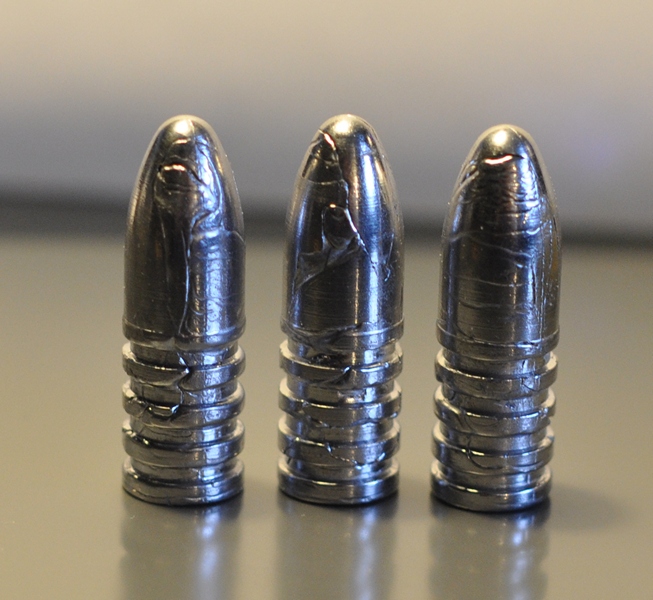
the bullets pictured below are bullets cast correctly but marginally cooler than if at the ideal temperature
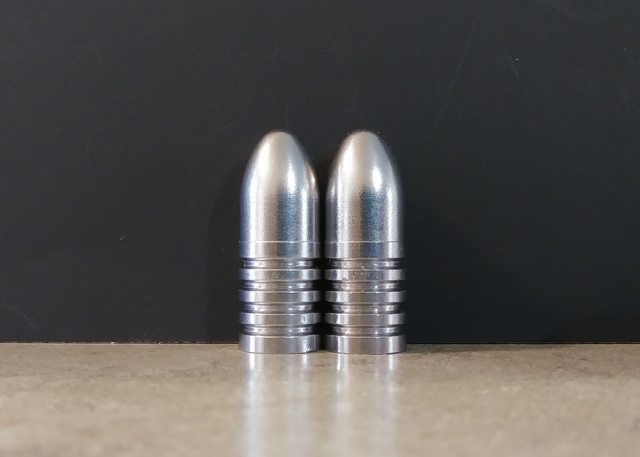
bullets with a marginally frosted appearance tend to be more consistent in weight and diameter,
but this can easily be over done, like these, bullets that appear to be below , which appear to have been cast with the alloy a bit too hot
(yeah the alloy used and temperature balance is critical, experience helps a great deal
I've found a mildly frosted appearance on the projectiles after casting rather than a shiny smooth silver sheen to produce noticeably more consistent projectile weights.
a ratio of about 95% old wheel weights and 5% pure tin, its the roughly 5% tin added to the wheel weight or other scrap lead, that makes the alloy both semi flex able, and elastic yet much harder than pure lead,, rather than brittle under hard impact, and has resulted in the best compromise in accuracy and bullet weight consistency, use of gas check bullet designs very definitely aid in increasing accuracy and reducing bore fouling.
I've also found that dropping the hot bullets into a 3/4 full 7 gallon bucket full of room temperature water helps with bullet accuracy and consistency.
the tin content must generally fall in 3%-6% range for bullets to fully fill the mold and perform well as to both accuracy and deep penetration
on larger game while still consistently expanding reliably without shattering on larger bones
I generally start a pot of bullet allow using ingots previously cast in old MUFFIN tins this results in about a 4-5 lb ingot, the lead has been repeatedly fluxed before the ingots are cast with a mix of old sawdust, and paraffin, about a 1/2 thick on a large cast iron pot that holds about 50 lbs of scrap lead, heated on an old turkey cooking furnace. and repeatedly stirred and heated to the point the alloy turns rapidly purple from heat as its stirred, and repeatedly fluxed.
these ingots are the basic lead alloy and inevitably will contain some antimony and calcium in unknown percentages
tin is added in the casting pot as required but youll generally fill the 20 lb capacity pot to about 80% of capacity then add a 1-2 lb ingot that's maybe 40% tin, made from 60%/40% plumbers solder, and then fill the pot to near full capacity with more cup cake pan ingots,
obviously this is not 100% percent precise as to the alloy ratio but with experience looking at the frosted appearance of the cast projectiles you can maintain a very consistent bullet hardness and projectile weight result.
related info
do you cast and hunt with bullets you made
how many guys use personally cast bullets from the custom bullet mold companys? back in the day, we could get LINOTYPE ingots fairly cheap, now that is not commonly available now I use cast bullets almost exclusively in my hunting revolvers and several 458 caliber rifles , because it both...
garage.grumpysperformance.com
Here We Go Again
Grumpy I am at it again I was getting tires on my truck and happened to ask the guy what he did with the old weights and he said he was going to bury them because everybody says that they want them but nobody ever comes to get them so I ended up with at least 500 #s of old wheel weights and so I...
garage.grumpysperformance.com
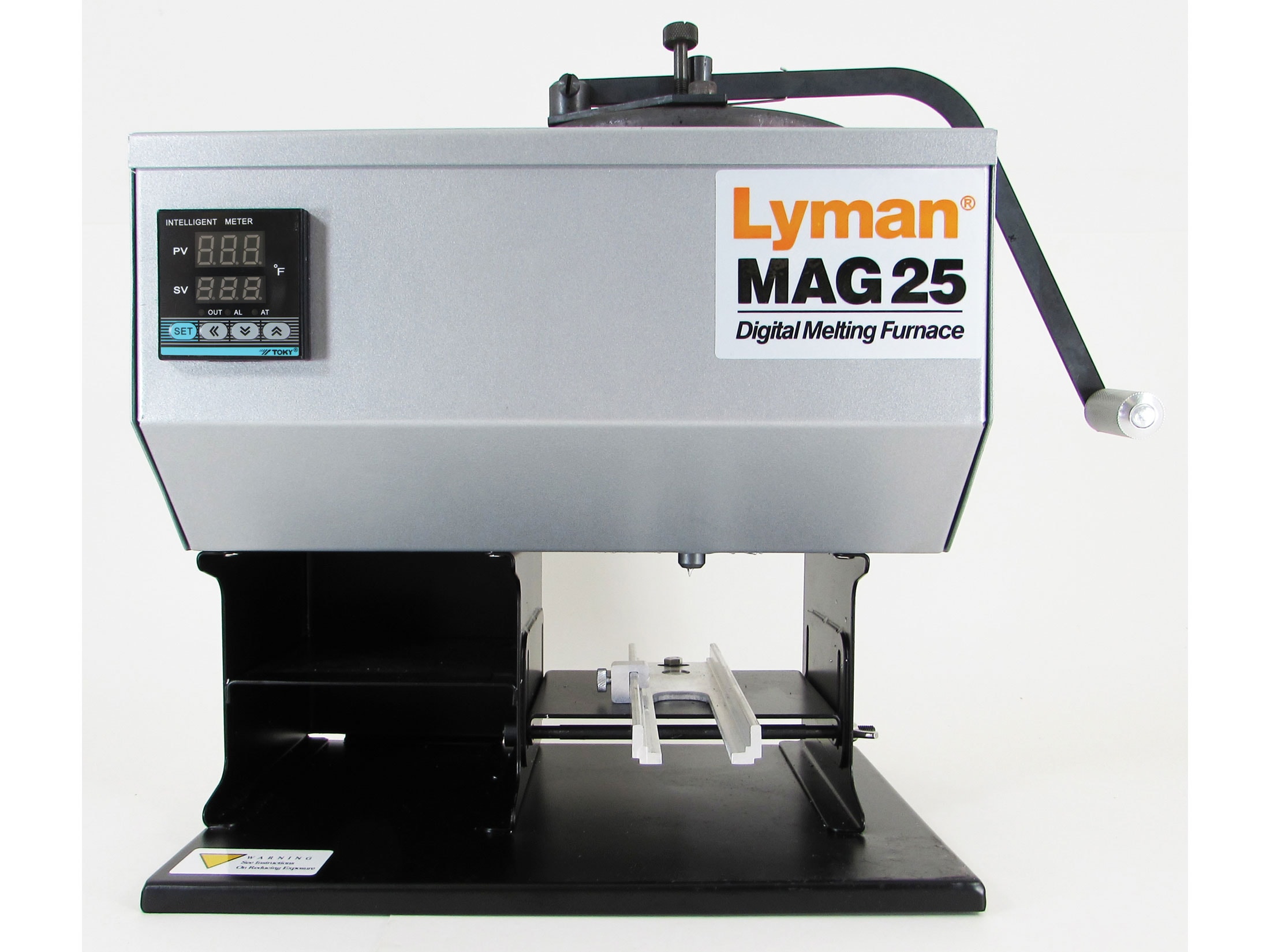
Lyman Mag 25 Digital Melting Furnace Lead Melting Pot
The Lyman Mag 25 Digital Melting Furnace was designed for the high volume bullet caster in mind. With 850 watts of power, the furnace is quick to heat...
 www.midwayusa.com
but you can get very good results from the less expensive furnaces
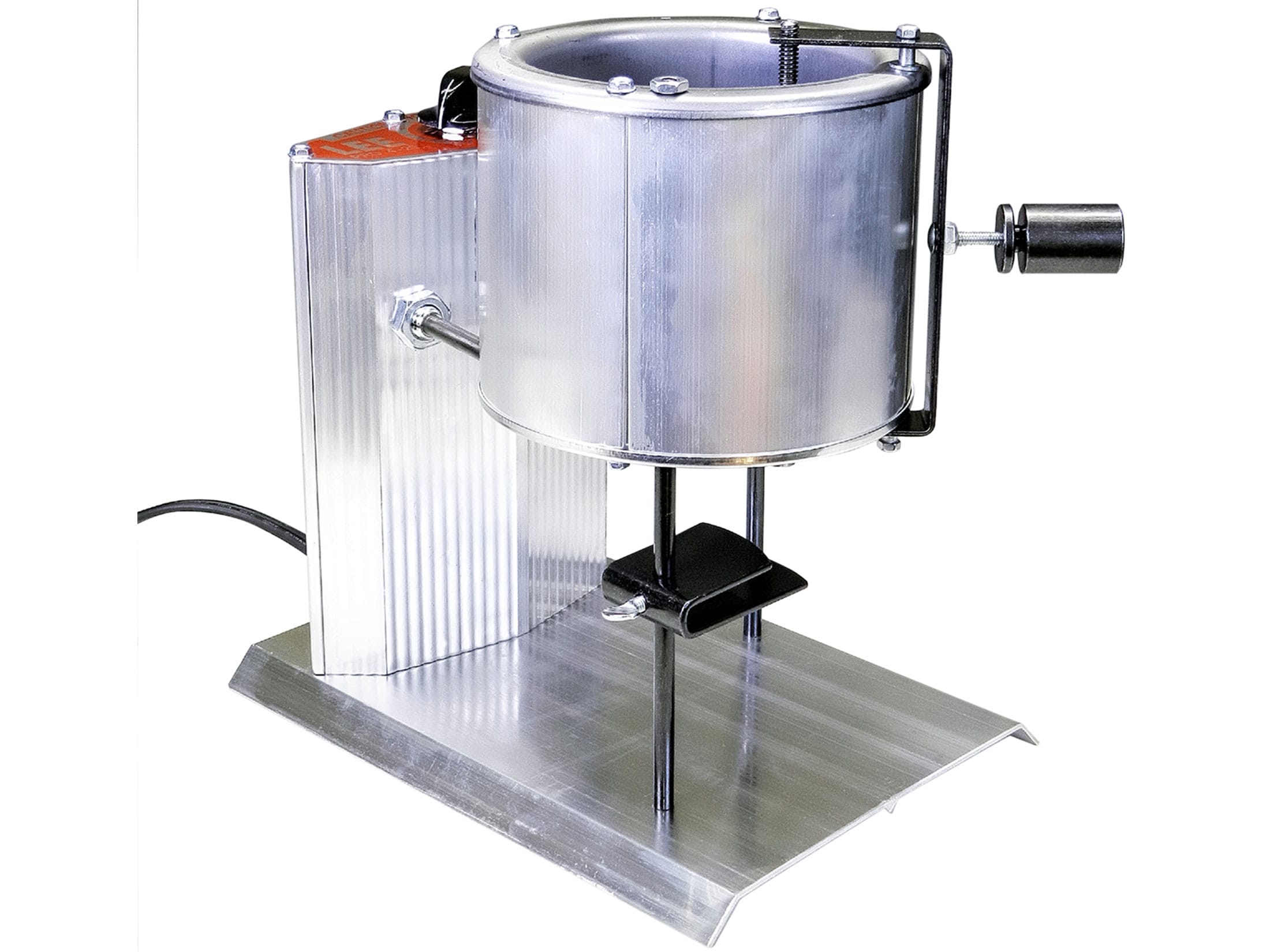
Lee Pro 4 Furnace Lead Melting Pot
The Lee Pro 4 20 Lb Furnace is a great furnace for any bullet caster looking for a solid reliable furnace without breaking the bank. The Pro 4 features...
www.midwayusa.com
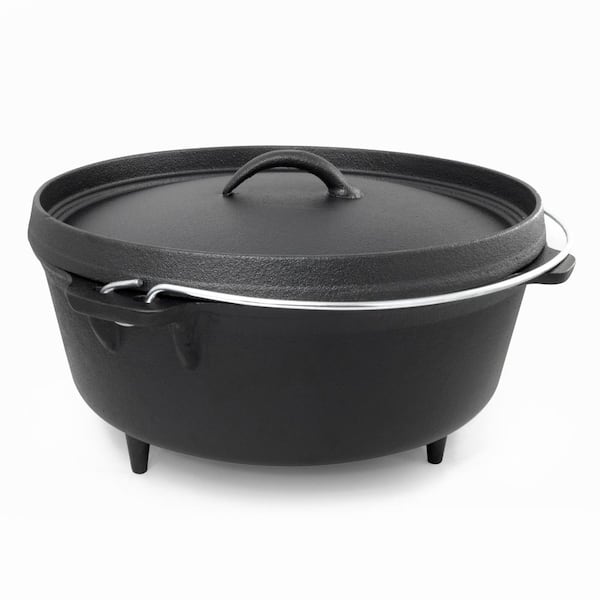
owning a 5-7 quart cast iron pot to melt and flux range and scrap lead over a propane furnace helps a great deal
https://www.amazon.com/AmazonBasics...locphy=9026987&hvtargid=pla-486136981640&th=1
Outdoor Gourmet Deluxe Fryer Stand | Free Shipping at Academy
The 58,000 BTU burner of the Outdoor Gourmet Deluxe Fryer Stand provides powerful heat to help you cook up a feast and is constructed from steel for strength and du...
 www.academy.com
a couple muffin pans to cast ingots certainly helps,
you'll occasionally see the old rusted cast iron muffin pans at yard sales dirt cheap, when you do grab them
as they are better than thin aluminum muffin pans for casting ingots
btw
placing the muffin pans on a large aluminum pan with some water in it for the muffin pans,
to make the ingots cool faster helps production rates
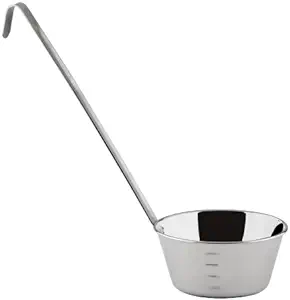
having a steel dipper to mix , flux and pour lead alloy into the muffin pan helps
Last edited: